
Words are a portable psychological first aid kit.
Words are your portable psychological first-aid kit.
As night deepens and emotions surge, and you must face your anxieties alone, we transform the clinical insights gained in the consultation room into clear and actionable practical guidance.
Each guide here is designed to help you unravel the complexities of relationships and calm your inner turmoil. They guide you to regain tranquility and find order amidst chaos.
This is not just reading words, but a profound practice of reconstructing oneself.


12,500+
Learn together with our readers.
Gradually Reconstructing the Inner Order
700+
Breaking the deadlock for couples
Reconnect with true health
3,000+
The visitors unravel the mystery.
Reclaim your inner control

The Logic of Disconnection: Reconciliation and the Game of Self-Esteem (HKD198)
Why is "cutting off contact" the most powerful counterattack at present?
The instinct after a breakup is often to blindly pursue and compromise, but psychology reveals a completely different truth. When a relationship is mired in anxiety, compromise, and endless tug-of-war, cutting off contact is not a sign of indifference or retreat, but rather a turning point to withdraw emotional investment and reshape personal boundaries.
This guide integrates Attachment Theory and Game Theory, discarding empty emotional manipulation tactics and providing you with a rational and clear internal reconstruction framework.
💡 Includes a practice unit with the book.
Mental Focus | Disconnected Underlying Logic and Progression Timing
Reshaping the Landscape: A Precise Analytical Framework for the Game of Self-Esteem
Practical Defense Line | Four-Stage Response Strategy + Crisis First Aid Guide

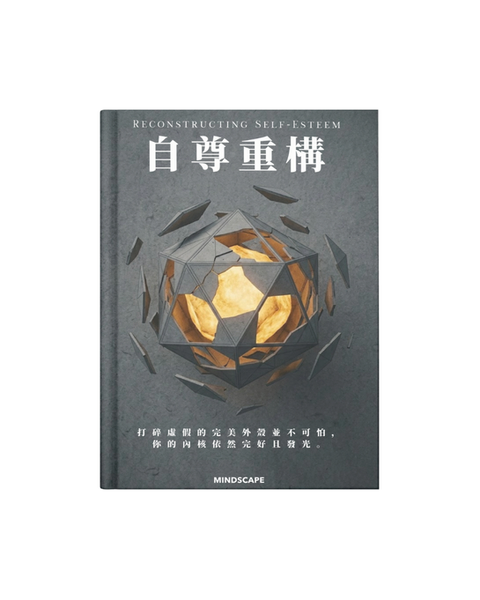
Self-respect structure
HKD198
Overcoming feelings of inferiority despite high performance, and saying goodbye to the hidden anxiety of "impersonation".
An internal restructuring project tailored specifically for perfectionists like you.
During the day, he displays extreme calmness and efficiency, but at night he is often quietly overwhelmed by the panic of "I am not good enough".
This is not some self-hypnotic "chicken soup for the soul" that teaches you to hypnotize yourself in front of a mirror, but rather an inner engineering guide based on cognitive behavioral therapy (CBT) and neuroscience. It is dedicated to those souls who habitually suppress their fears through excessive sacrifice, are almost harsh on themselves, yet are ultimately unable to find peace within themselves.
💡 Includes a practice unit with the book.
Precise Graph | Identifying High-Functional Inferiority Complex and Cognitive Blind Spots
Deconstructing Beliefs | In-depth Reconstruction Exercises of Limiting Thinking
Daily Repair | Sustainable Mind and Body Stability Toolkit

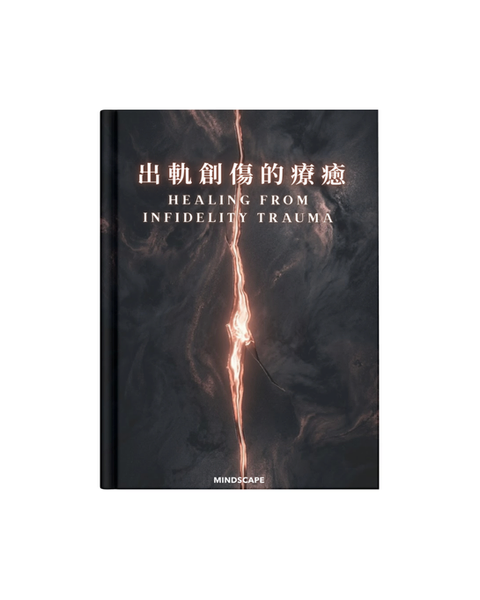
Healing the Trauma of Infidelity
HKD198
When trust suddenly collapses, one sees the price and choices behind betrayal.
A deep psychological map of relationship trauma: the deep pain of suspicion, self-blame, and confusion when trust is broken often stems from futile attempts to find answers.
This is a psychological navigation map specifically designed for relationship trauma, helping you to see the situation clearly and break free from emotional control. Whether it's assessing the real cost of "reconciliation" or accumulating the confidence to "leave gracefully," you can find clear direction and answers here.
💡 Includes a practice unit with the book.
A Closer Look at the Mystery: Psychological Mapping and Emotional Positioning After Trust Breaks Down
Decision Analysis | Assessment of the Cost of Relationship Repair and the Confidence to Exit
Trauma Repair: A Practical Guide to Reconstructing a Sense of Security and Personal Boundaries
Ms. Grace C
The writing is sincere and warm, demonstrating a strong sense of empathy.
Through reading and practice,
I've finally gotten my life back on track.
Ms. Queenie L
Surprisingly
Follow the instructions in the book
I successfully cleared up the misunderstanding with my ex and got back together.
Mr. Dan K
With its delicate and nuanced brushstrokes, the book vividly portrays the fluctuations in emotions and the shifts in mood, giving me the strength to regain my self-confidence.
About the author
Founder Maisie graduated from University College London (UCL) with a Master of Science degree and pursued in-depth studies at the Oxford Mindfulness Centre. She excels at using a delicate yet not sentimental, rational yet not cold writing style to accurately dissect the underlying context of interpersonal relationships and emotional turmoil.
This series of guides embodies over a decade of her writing and clinical experience. She transforms a rigorous framework of psychotherapy (covering CBT, DBT, and couples and family therapy) into practical, easy-to-understand, and readily accessible action guidelines—making psychology no longer an academic theory lofty in the halls of power, but a healing key that accompanies you to settle your mind and body.


By being mindful and breathing, create a space of tranquility for your soul.
Based on scientific evidence, find inner peace through breathing exercises.
Mindfulness is a set of mental exercises based on scientific evidence.
Through gentle awareness, deep breathing, and focused reflection, it guides you to peacefully return to inner peace and balance amidst a busy life, mental and physical stress, and emotional turmoil.
Mindscape offers a step-by-step guide to mindfulness in Cantonese. Whether you are a complete beginner or a practitioner looking to deepen your practice, it's suitable for you.
Everyone can find a suitable rhythm here, allowing their mind and body to regain peace anytime, anywhere.


[Course Announcement and Subscription]
We hold mindfulness workshops and retreats at various stages from time to time.
If you are eager to be among the first to know about future opening information, please leave your email address and wait for this invitation to your heart.
[Overview of Past Courses]


What is mindfulness?

1
Awareness and acceptance
Mindfulness is a practice that brings attention back to the present moment. By being aware of our breath, feelings, thoughts, and emotions, we learn to observe our inner experiences in a non-judgmental way.
2
Live in the moment, without judgment.
Observation is not about pursuing a "blank mind".
Instead, it allows us to see ourselves more clearly amidst the complexities and pressures of life.
3
Reduce stress and shift your focus
Mindfulness has been widely used in psychological education, emotion regulation and stress management, and is also a common method of personal mental and physical care internationally.
The core elements of mindfulness
靜觀專家 Jon Kabat-Zinn 以及Ruth Baer 和Steven Hayes 等研究人員定義的靜觀:
Subsequent consciousness
Focus your attention on the present experience, such as your breathing, feelings, and emotions, rather than dwelling on the past or the future.
Observe inner experience
Pay attention to thoughts, emotions, and physical sensations in a non-judgmental, curious way, rather than believing every thought or reacting to every thought.
Describe in words
After observing, silently mark the experiences in words to help separate them from yourself and reduce reactions. For example, "I feel tension in my shoulders."
Conscious action
Focus on the current activity/task, rather than autopilot or multitasking. Be aware of any lapses in concentration and gently refocus your attention.
Do not criticize experience
Treat unjudged thoughts/emotions as valid experiences happening now, rather than judging them as good or bad.

Mindfulness requires no rituals or special equipment; it only requires a few minutes of quiet and awareness.
The practice method is simple:
Find a comfortable place to sit down
Bring your attention back to your breathing
Pay attention to the rise and fall of the chest or abdomen.
If your thoughts wander, gently bring your attention back to your breathing.
No need for deliberate control, just observation.
It only takes 5 minutes a day to get started.
Consistent practice can gradually change our perspective on stress, emotions, and life.
MINDSCAPE also offers introductory courses in mindfulness to help beginners build a solid foundation for practice.
Frequently Asked Questions
I'm very busy, can I practice mindfulness instead?
Yes. Even just 3-5 minutes of short practice each day can gradually improve awareness and stability.
Mindfulness can be practised at any time, such as while waiting for a bus, before lunch, or before bed.
What are the unique features of MINDSCAPE's mindfulness courses?
The course is based on psychoeducation, combining empirical mindfulness methods, experiential exercises, and guidance, making it suitable for learners of different levels. We emphasize practical application and present the material in a gentle, clear, and understandable manner.
How long will it take to feel the change?
Most people will feel improved concentration, emotional stability, and reduced stress after practicing for a period of time. Mindfulness is a cumulative process, and the pace varies from person to person.
Is mindfulness suitable for everyone?
Mindfulness is a general mental health education tool suitable for most people who wish to improve their calmness, awareness, and concentration. If you are experiencing severe emotional distress or a mental health crisis, it is recommended that you seek medical or clinical psychological support first.
My mind keeps wandering during practice. Am I doing something wrong?
This is perfectly normal. The key to mindfulness is not "having no thoughts at all," but gently bringing your attention back to your breath after each distraction.
What should I do if I have any questions? Who can I contact?
For any inquiries, whether about mindfulness practices, course content, or how to get started, please feel free to contact us via WhatsApp or email. The MINDSCAPE team will do its best to respond to your questions and provide the guidance and support you need.
Suicide Prevention Safety Plan
Suicidal thoughts are not uncommon, but thoughts do not necessarily turn into actions.
A safety plan is a set of proven tools designed to help individuals or supporters stay safe and get through high-risk periods during crises.
This plan includes:
Personalized danger sign identification
Available methods for emotional reassurance
Supporters who can be contacted
Professional and emergency assistance channels
Safety and environmental preparation
Specific action steps during a crisis
We will provide examples, guidelines, and downloadable versions in the project.
⚠️ If you or someone else is in danger of losing their life, please contact emergency services or crisis hotlines immediately (e.g., Samaritan Hong Kong 2389 2222).


